
OVERVIEW Critical communication and instrumentation lines subjected to very high energy RF pulses require RF limiters with exceptionally high pulse power capability. A discussion of a typical high frequency (HF) commercial off the shelf (COTS) limiter manufactured and tested by NexTek is presented to provide insight and understanding of … [Read more...]
Science Fiction from Childhood is Now a Reality. Thank You, EMC.

I grew up in the 90s in a small town in West Virginia. Everybody knew each other, everybody knew each other’s kids, and all of the kids spent time at each other’s houses in the summertime. When the heat and humidity turned oppressive, we’d spend the middle of the day inside, playing video games, listening to music, reading comic books, or trading baseball cards. … [Read more...]
ITG Electronics Expands European Manufacturing Capabilities by Acquiring Max Holzinger & Co GmbH

Strategic move extends electronics portfolio and industry production footprint in EU. Elmsford, NY - ITG Electronics, a leading manufacturer of magnetics and EMI filters, has acquired Max Holzinger & Co GmbH (MH), a prominent Germany-based manufacturer of high-reliability components for a variety of industries. The acquisition marks a significant … [Read more...]
EMC and Reliability in Flex PCB Cables Vs. Cable Assemblies

In military and aerospace systems, interconnect failure isn’t just an inconvenience; it can mean mission failure, equipment loss worth millions of dollars, or in the worst case, loss of life. Every connection between circuit boards represents a potential point of failure that must withstand extreme environmental conditions while maintaining signal integrity and EMC … [Read more...]
Empower RF Systems Releases New C-UAS RF Amplifier Module, Model 1211

Empower RF Systems is proud to announce the release of its latest C-UAS RF amplifier module, Model 1211, engineered for robust performance in demanding military and defense applications. Operating across 500 to 2500 MHz frequency range the Model 1211 guarantees a minimum of 100 watts of output power while typically delivering up to 125 watts. With … [Read more...]
Bridging the Gap Between Theory and Practice With an EMC Demonstration System
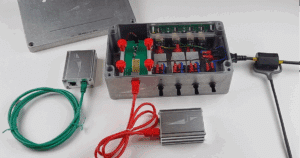
INTRODUCTION Those graduating from university are often not trained in EMC. When they are, they are most likely trained very well in the theoretical aspects of EMC or at least some physics. However, they often lack the ability to apply these theories to gain a hands-on understanding of EMC principles. I have seen both junior and senior engineers … [Read more...]
CAL-P: The First Portable, Universal System for Functional Verification of EMF Sensors

In today’s landscape of electromagnetic field (EMF) measurements, ensuring the proper operation of measurement instruments quickly and directly in the field represents a major advantage for technicians. The growth of wireless applications, the expansion of broadband networks, and the need for compliance with international standards have made it essential to have … [Read more...]
Mersen Announces Expansion to Surge-Trap® STXH 75kA Series
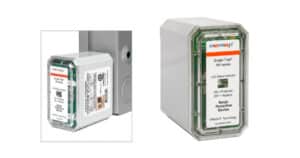
Mersen Announces Expansion to Surge-Trap® STXH Series Latest addition to the Surge-Trap Residential Protection Product Offering NEWBURYPORT, MA (December 1, 2025) — Global electrical power and advanced materials leader Mersen is pleased to announce the expansion of its STXH Series of Surge Protective Devices (SPDs). Mersen’s leading SPD for residential … [Read more...]
KRYTAR Announces New Compact 3 dB, 180-Degree Hybrid Coupler Covering 7.125 to 15.35 GHz
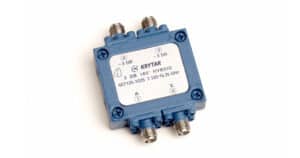
FOR IMMEDIATE RELEASE KRYTAR Announces New Compact 3 dB, 180-Degree Hybrid Coupler Covering 7.125 to 15.35 GHz NOVEMBER 11, 2025, SUNNYVALE, CALIF. — KRYTAR, Inc., a leader in the design and production of ultra-broadband microwave components and test equipment announces a new 180-Degree Hybrid Coupler that delivers 3 dB of coupling over the frequency … [Read more...]
You Measured What? 4 Must-Know Checks for Trusting Your S-Parameters

Verifying your trace S-parameters is more than just good practice—it’s essential for confident measurement, simulation, and design space exploration in modern EDA tools. Especially in high-speed digital systems where traces are long, applying a few key principles can provide valuable insights into your data and give you a head start in your design … [Read more...]
- « Previous Page
- 1
- 2
- 3
- 4
- 5
- …
- 275
- Next Page »