CONTENTS Introduction Basics e-Motors Battery Testing Summary Note: This article is an abridged version of the white paper “EMC and eMobility” published in 2024 by MVG, available at www.mvg-world.com. The full paper provides expanded technical detail and includes additional coverage of EV charging, which is only briefly referenced here for … [Read more...]
How to Build a Reliable TDR from S-Parameters to Reduce EMI Worries

When Two TDRs Don’t Agree As modern high-speed designs push into multi-gigabit and higher data rates, EMI and EMC engineers rely on multiple signal integrity (SI) metrics to evaluate interconnect performance. Among these, time-domain reflectometry (TDR) remains one of the most direct methods for identifying controlled impedance and … [Read more...]
Can CubeSat ESD Testing with Sound Packaging Engineering Protocols Before Launch Ensure Successful Deployment? — Part 2

Read Part 1 of this CubeSats series here In 2016 and 2018, Bob Vermillion gave a series of groundbreaking presentations on “CubeSats Require ESD Handling Protocols for Launch & Space Survivability” to enthusiastic audiences of university graduate students, aerospace engineers, NASA civil servants and academic researchers at the NASA-Auburn Academy of Aerospace … [Read more...]
Why Maxwell’s Plane Wave Solution Matters in RF

Transmission lines, antennas, and RF measurement systems all rely on a single electromagnetic model - the plane wave solution to Maxwell’s equations. While often treated as a theoretical result, this solution governs how energy propagates, reflects, radiates, and ultimately contributes to interference in real RF hardware. There are several, heavy … [Read more...]
Bridging the Gap Between Theory and Practice With an EMC Demonstration System
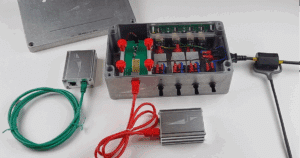
INTRODUCTION Those graduating from university are often not trained in EMC. When they are, they are most likely trained very well in the theoretical aspects of EMC or at least some physics. However, they often lack the ability to apply these theories to gain a hands-on understanding of EMC principles. I have seen both junior and senior engineers … [Read more...]
You Measured What? 4 Must-Know Checks for Trusting Your S-Parameters

Verifying your trace S-parameters is more than just good practice—it’s essential for confident measurement, simulation, and design space exploration in modern EDA tools. Especially in high-speed digital systems where traces are long, applying a few key principles can provide valuable insights into your data and give you a head start in your design … [Read more...]
What You Need to Know to Design Your Own Kit of Near-Field Probes
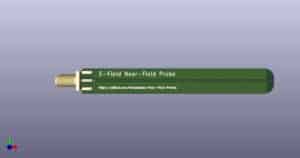
One challenge for EMC engineers is the impossibility of visualizing electromagnetic fields with our own eyes. Since we cannot directly observe them, we need tools to transform what we cannot see into what we can see. There are a lot of EMC tools to measure and troubleshoot EMC problems, but their elevated price makes them accessible to only a select group of people. The … [Read more...]
CubeSats Require Special ESD Handling Protocols for Launch Integrity — Part I
Figure 1: Tu-Pod in Space (Courtesy Amin Djamshidpour, Co-Founder Teton Aerospace) CubeSats are relatively inexpensive when compared to traditional vehicle-size satellites. Since their inception, CubeSat spacecraft have shown functional success rates ranging from 40% to 75% for launch and deployment phases. According to the International Journal of Aerospace Engineering, … [Read more...]
An Easy Way to Calculate a Microwave Wavelength in Inches

A colleague, Mike Stasiowski, and I came up with this quick GHz wavelength formula while designing quad ridge circular polarized jamming antennas for the military when working at Nurad. The textbook formula (wavelength = c/f) where: c = the speed of light 3.00×10⁸ m/s, and f = frequency in Hz, was cumbersome at times to calculate, then convert, to inches for practical … [Read more...]
Static Control Resilient Flooring Qualification Procedures Ensure Space and Defense ESD Compliance Pt. 2
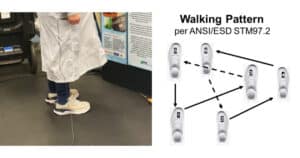
This article is the second and final part of Static Control Resilient Flooring Qualification Procedures Ensure Space and Defense ESD Compliance. Read Part 1 here. ANSI/ESD STM97.2 This critical standard test method attests to the static control resilient flooring’s ability to minimize charge buildup and provides the user with traceable data to assign a voltage flooring … [Read more...]
- 1
- 2
- 3
- …
- 42
- Next Page »