OVERVIEW This App-Note provides a thorough examination of rectangular and double-ridge waveguides, highlighting their design, operating principles, advantages, and applications. It details specifications and power-handling considerations essential for RF systems. Waveguides are crucial in microwave engineering, offering low-loss, high-efficiency transmission for … [Read more...]
What You Need to Know to Design Your Own Kit of Near-Field Probes
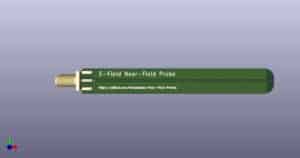
One challenge for EMC engineers is the impossibility of visualizing electromagnetic fields with our own eyes. Since we cannot directly observe them, we need tools to transform what we cannot see into what we can see. There are a lot of EMC tools to measure and troubleshoot EMC problems, but their elevated price makes them accessible to only a select group of people. The … [Read more...]
Myths and Legends of EMI in PCB Design

Many designers struggle with EMI and EMC challenges, and there are many myths surrounding EMI that do not help designers overcome EMC hurdles. Some designers may lack experience, while others may know EMI/EMC rules but apply them incorrectly. There is also an issue of delegation, where EMI/EMC is sometimes seen as not being a designer’s problem. No matter who is … [Read more...]
EMC Immunity Testing: Do You Know Your Failures?

Electromagnetic compatibility (EMC) is the desired condition for electronic devices. In an ideal world, radio-frequency emissions and transient events would not cause failures or disruptions to electronic equipment. But as much as we (and the product manufacturers) wish otherwise, we are not in an ideal world. Radiated emissions, whether intentional from transmitters or … [Read more...]
IoT Systems with mmWave Sensors

One of the most common applications of Internet of Things (IoT) devices is sensing, followed by transmission of raw data back to a base station or server for storage and further analysis. The most common of these sensing tasks seems to be environmental sensing, such as monitoring gas concentrations, temperature, humidity, etc. These devices are so ubiquitous that they … [Read more...]
Regulatory Lunch Break: Alphabet Soup

Over several decades, the FCC, the US Trade Representative, Department of Commerce (NIST) and the Industry (TCB Council, ACIL, Private Labs, including WLL) have been involved with opening up regulatory trade arrangements under the guise of “Mutual Recognition Arrangements” (MRAs). The purpose of MRAs is to even the playing ground for labs and their industrial clientele. In the … [Read more...]
Skip-Layer Routing for High Bandwidth Channels

As we have seen from discussions on chiplets and their routing standards in substrates, many of the routing techniques used in PCBs also apply in packaging. Microstrip and stripline structures can both be used in IC substrates, and the design approach is basically the same as in PCBs. This routing is fine for the majority of digital interfaces, but when we get to wideband … [Read more...]
Navigating Signal Integrity in Chiplet Designs

As the semiconductor industry embraces the chiplet design approach, electrical engineers are witnessing a significant shift in how performance, cost efficiency, and scalability are achieved. While this modular design philosophy offers advantages, it also introduces challenges to signal integrity (SI). For EMI/EMC engineers, the awareness of these signal integrity challenges is … [Read more...]
An Easy Way to Calculate a Microwave Wavelength in Inches

A colleague, Mike Stasiowski, and I came up with this quick GHz wavelength formula while designing quad ridge circular polarized jamming antennas for the military when working at Nurad. The textbook formula (wavelength = c/f) where: c = the speed of light 3.00×10⁸ m/s, and f = frequency in Hz, was cumbersome at times to calculate, then convert, to inches for practical … [Read more...]
Shielding Design Flow Chart

The flow chart in Table 1 will assist the designer in selecting the appropriate shielding options necessary to meet their shielding and environmental requirements. The shielding requirement flow chart begins by identifying the type of NEMA or IP enclosure based on the intended environment (indoor/outdoor, military/commercial, marine or land/desert). Then, using the resulting … [Read more...]
- « Previous Page
- 1
- 2
- 3
- 4
- …
- 43
- Next Page »