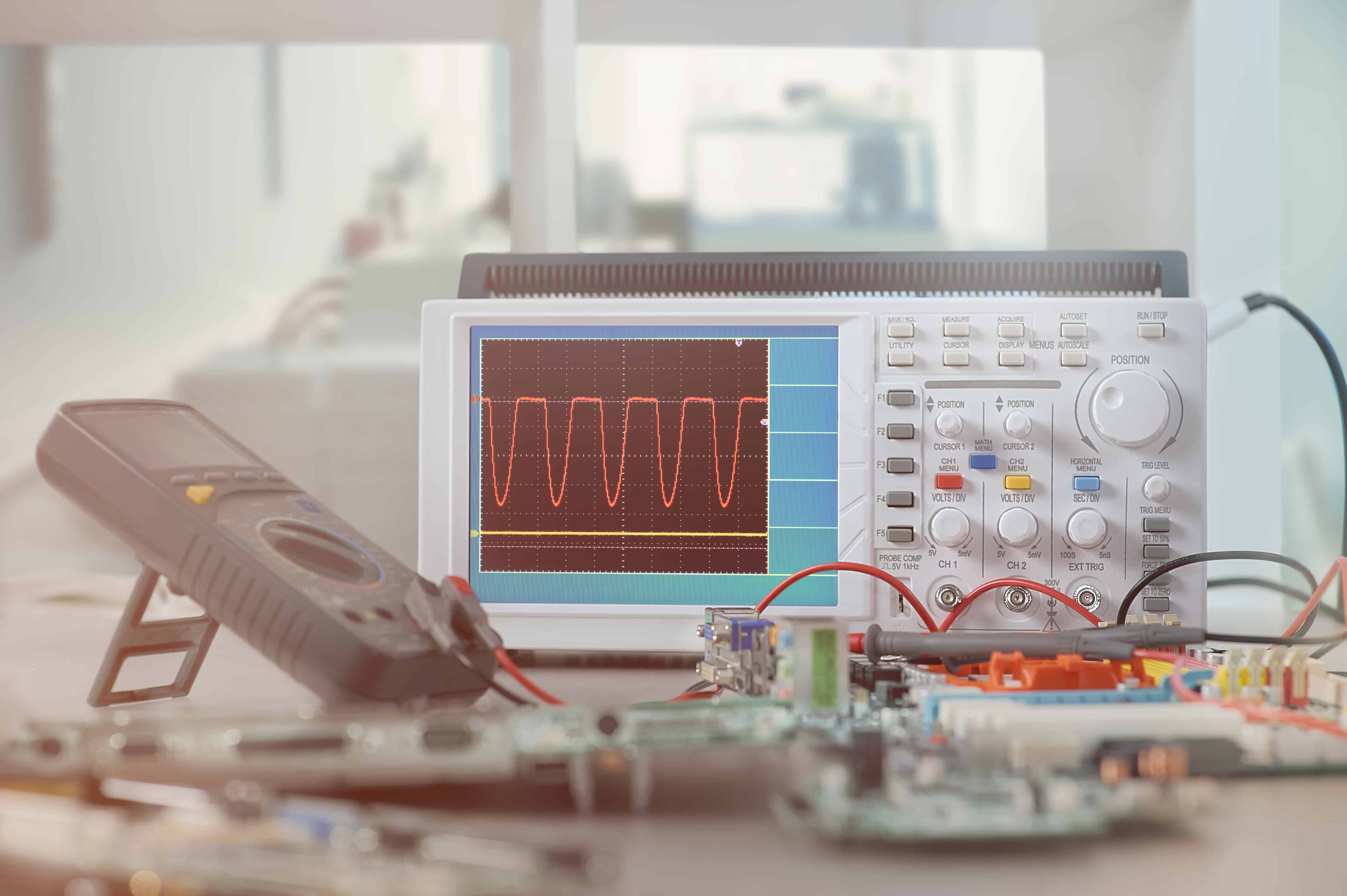
There are risks in every work environment: risks to humans, risks to equipment, risks to things you might be testing, and risks to customers’ equipment.
Such is the case in an EMC lab, which is typically an ever-changing environment with moving parts, equipment, people, and projects.
From day to day, EMI personnel can be working on military equipment worth millions of dollars to the government (and the taxpayers) or testing a tiny transmitter that has a retail cost of less than 20 dollars.
The personnel in an EMC lab, including the technicians, engineers, administrative people, and the customers, should all be aware of their surroundings, as they change quickly and without notice.
My personal experiences in an EMC laboratory environment span the gamut of participation. From being a customer to an engineer to performing actual testing, I’ve run into several situations where, if the outcome were different, I probably wouldn’t be writing this today.
I should also state that these experiences and responsibilities are my own and do not reflect upon my previous employer or former coworkers. All of these anecdotes were my own oversights.
And, speaking of risks, we should probably talk about them.
For humans, live terminals on Equipment Under Test (EUT), Line Impedance Stabilization Networks (LISNs), and test equipment are often present. Sharp edges (especially on prototypes), tripping hazards like cables run on the floor through test chambers, and unexpectedly heavy test equipment can cause injuries quickly.
And, since it’s an ever-changing environment with multiple people working on multiple test programs, rotating personnel from one test to another can lead to unsafe conditions.
This brings us to our first scenario.
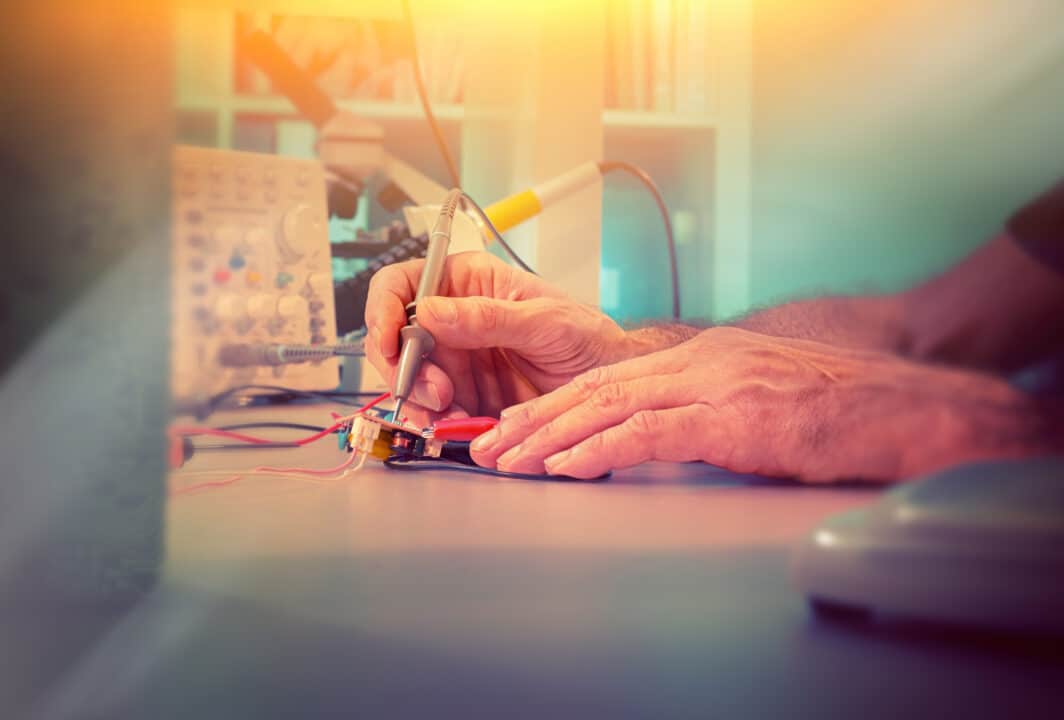
ELBOWS AND OPEN TERMINALS
We were testing a shipboard panel with some motors attached to it, powered by 440 VAC, 3-phase, shipboard delta power, ungrounded.
We had three LISNs on the bench, bolted down with 1/4-20 hardware and exposed terminals. This becomes important in a moment.
This was the first test method on the program, and the technician had set up the EUT and started running a CS114 calibration. They were then assigned to another program, and I went to manage this program until the next technician was available.
While the calibration was running (it takes about an hour), I took it upon myself to start putting away tools that were on the bench, left over from the setup. I didn’t mind since I had about 45 minutes left to kill.
This is when mistakes happen.
The EUT was still powered on, and I was reaching onto the bench around live 440 VAC. My elbow bumped into one of the live LISNs, giving me a bit of a wake-up call.
I dread to think of what could have happened if bare skin had touched the table-top ground plane or some other grounded object in that instant.
After that happened, I was always more cognizant of open terminals and moved much more methodically around them, knowing what could happen in a flash.
LISNS and terminal blocks aren’t the only type of exposed terminals present in an EMC lab. Some of those exposures can be hidden.
A DEMANDING CUSTOMER, A LIGHTNING GENERATOR, AND A THUMB
Our second scenario involves a demanding customer, a lightning generator, and a thumb.
We had a customer who struggled to understand basic tolerances given inside a test standard, where a waveform can be with +/- a certain percent of nominal.
Well, on that day, our waveform during a DO-160 lightning test was a little short.
It was within tolerance, but the customer wouldn’t accept a “short” waveform. Well, the joke was on me, since I had to figure out how to make him happy without reasoning with him, since that attempt had already failed.
We started using different injection probes, injection cables, BNC cables, and twisted leads. Each time, we got a little closer, but not to his liking.
And just before I was ready to tell him to go pound sand, I had one last idea: I would connect a different BNC cable to a different probe. And I was in a hurry.
See above: this is where mistakes happen.
The lightning generator was still charged up from the previous attempt. And, you know that little thumb trick to check to see if your RF connector pin is in the right spot? Where you compare the indentation of the backshell and center pin on your thumb?
Yeah, I did that.
On a charged-up lightning generator.
Ouch.
Luckily, in my estimation, there wasn’t much path for the current to flow, but I DID get to check the “skin-effect” of a lightning pulse on my left thumb. Could have been worse, I guess.
With a racing heart and an aching thumb, I was able to convince my customer to take a lunch, and I finished his calibration without him watching over me.
We had him submit the plots to his customer, and they concurred that he was nuts, and we proceeded with the test.
Enjoying this article?
Subscribe to Interference Technology for expert coverage of EMI, EMC, and signal integrity challenges—plus immediate access to new digital magazine issues.
Subscribe here →
“DID YOU TURN THE RF OFF?”
Sometimes, things can happen with multiple people watching it and nobody realizing that things are amiss before it’s too late.
MIL-STD-461 RS103 is an easy test. Signal generator, amplifier, antenna, some cables, and a field probe.
As you get higher in frequency, you can run into issues with cable losses and the ability to control things. Which is our next example.
We weren’t making field above 18 GHz. We had plenty of amplifier power, good antennas, impossibly short cables, and three people wondering why we weren’t hitting the required field.
We went into the room, checked things out, and adjusted the antenna. Well, I adjusted the antenna.
And as I adjusted the antenna, my hand was in front of it. And it began to cook. I could feel it start to heat up when it was directly in front of the antenna.
I looked at one of the other people in the room and asked, “Did you turn the RF off?”
“Uh, I thought so.”
“Pretty sure you didn’t.”
Outside the room, we gathered around the test equipment like it was a car accident, seeing that the RF was on and the field level was now north of 500 V/m.
Back calculating that from about 1 meter to about 10 centimeters puts the field strength at my hand to something… much higher.

“I JUST REPLACED THOSE LIGHT BULBS YESTERDAY.”
Sometimes, scenarios can happen in a lab that don’t necessarily put the staff near death’s door. Sometimes things happen that can be funny, or at least entertaining.
Remember the LISN issue above? Well, being a shipboard device, it had to go through MIL-STD-1399, Section 300, Voltage Spike.
Those who have run that test know that it’s no joke. Lots of energy, lots of volts, and lots of spikes.
So, I completed my calibration, connected everything to the EUT, and was ready to go. Turn on the device, it’s running, let’s party.
First spike, the unit turns off. Ok, great, failure. I surmised that it was probably the internal power supply, since it was a COTS (commercial off the shelf) device subject to a military standard without much protection.
As I walked over to stop the generator from continuing the test, the next spike hit. And all of the incandescent light bulbs in the room turned off. Well, all but three of them.
I grabbed a flashlight and aimed it at the ceiling. Most of the light bulbs were black. Some were a nice brown color. But they were all burnt.
A quick multimeter measurement showed that the initial spike that wrecked the EUT shorted the phase to ground, and the second spike threw a nice, low-impedance spike into the room, and that found its way into the lights, popping most of them in the series.
The best part was that our maintenance person, who had worked there for ages, walked by while I was examining the situation. She looked into the room and asked, “Why are there only three lights on?”
“Oh. Looks like the spike took them out. Pretty cool.”
“I just replaced those light bulbs yesterday.”
“Welp, looks like there’s a trip to the hardware store on your schedule today.”
A nice little “Harumph” and she walked away.
AVOIDING PREVENTABLE DANGEROUS SCENARIOS
All of the above scenarios are and were preventable.
From ensuring AC power and RF field are off to making sure generators are discharged before approaching them, these scenarios can be mitigated.
Just like avoiding tripping hazards and sharp edges, and knowing the capabilities of devices, all of this is preventable.
Respecting equipment and your environment and paying close attention to your surroundings will ensure safety in an EMC lab — and, really, any laboratory.
So, the next time you’re involved in an EMC test or at a facility with a lot of moving parts, including equipment, people, and situations, be sure to take your time, pay attention to what is happening, and respect the boundaries of the environment.