Coming out of college, whether it’s electrical, mechanical, software, or any other engineering discipline, a lot of young engineers picture themselves as Tony Stark building an Iron Man suit or as Mark Watney getting stuck on Mars and engineering his way back home to Earth as their future career.
What many young engineers don’t quite understand is that engineers rely on many different disciplines and specialties to succeed in their own roles; electrical engineers have to work with mechanical engineers have to work with software engineers have to work with management to understand the project at hand and have success.
On any given day, an engineer working on a product, a project, or a program will need to work with other subject matter experts to make forward progress.
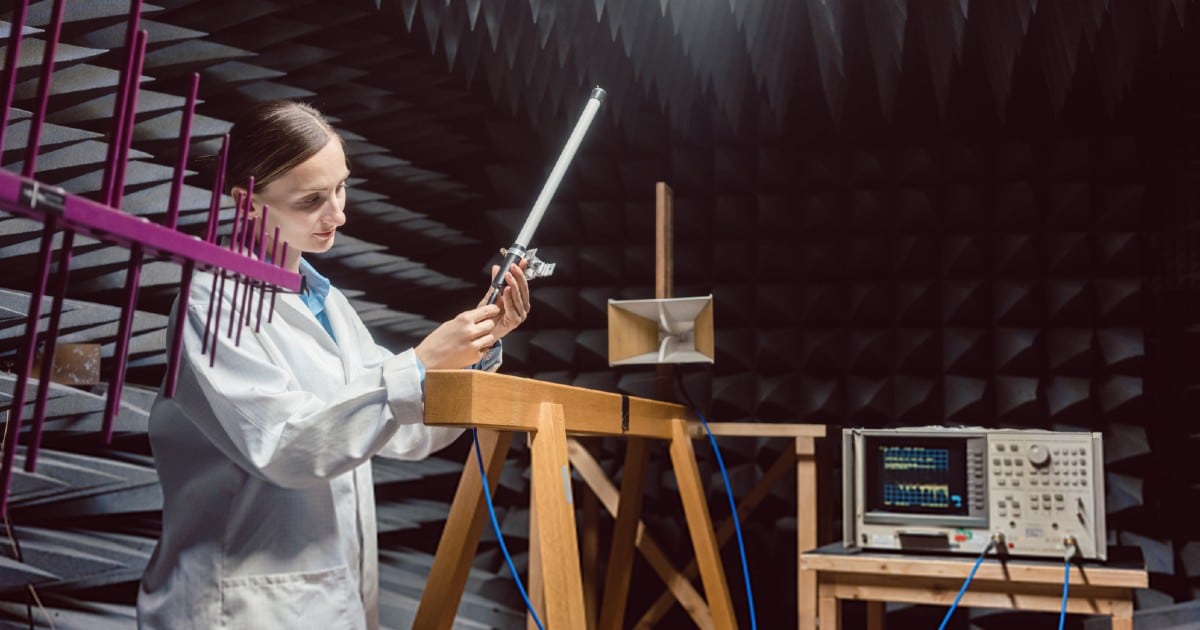
Enter the role of the EMC engineer. The role of the EMC engineer isn’t typically involved in design directly, but they affect every single step in the product life cycle.
Let’s take a look at some different phases and how an EMC engineer should be involved from the start to the finish.
1) Requirements
The requirements phase of any development needs input from an EMC engineer to outline what must be met to ensure success.
In the commercial world, planning for regulatory testing and compliance should be discussed at the highest level to prepare for upcoming testing and assurance of compliance.
If selling only domestically in the US, FCC requirements may only be required. If selling into Europe and other countries across the globe, the EMC Directive and other regulatory bodies’ requirements must be understood in order to be met.
This planning is critical. Budgetarily speaking, some companies don’t plan for the lab testing ahead of time and get sticker shock when they see how much regulatory testing may cost. If budgeted ahead of time, that sticker shock becomes more of a buzz.
In other industries, requirements are likely defined by a customer or procuring activity. Commercial aviation requirements have their own definition, and aircraft manufacturers like to add their own requirements on top of what already may exist.
RTCA/DO-160 is a great starting point, but airframes, which are composite or don’t provide as much shielding as a fully shielded fuselage, may need some additional protection from things like EME (Electromagnetic Environments) and lightning.
Both Boeing and Airbus have their own series of EMI standards which overlay a lot of the requirements in DO-160, which need to be understood to reach compliance.
Military programs are even further in-depth than the above, often with a governing document that defines the environments for transportation, storage, testing, and operation for military systems. This includes vehicles, weapons, and systems all working together for mission success.
Understanding these environments and how to apply the requirements at the box level is a major responsibility of an EMC engineer or an entire EMC team.
An additional responsibility of the EMC engineer(s) is to ensure that each stakeholder in the requirements process understands the ramifications of NOT meeting the EMC requirements and the penalties associated with it.
This includes legal issues such as fines or, even worse, missing deadlines and contractual penalties and losing future contracts or work because of EMI issues.
Finally, stakeholders need to understand that requirement definitions can be an iterative process. Changing certain aspects of a design may change the regulatory requirements, affecting budgets, schedule, and operation.
2) Design
This is where the rubber meets the road for many EMC engineers. Every aspect of the design should be reviewed by an EMC engineer who understands the potential for EMI issues down the road.
This includes, but is not limited to:
Overall shielding of enclosures: Apertures, including venting for temperature control and windows for antennas, open doors on racks during operation, and other potential ingress/egress of RF energy should be reviewed and mitigated. Measuring the overall shielding effectiveness can also help engineers understand how to test something at the box level for EMI assurance.
Cable construction: The use of shielding, whether it be individual pairs or overall braids or foil, cables are always potential unintentional antennas and radiators. Terminations at cable connectors, whether they are pigtail or 360º variety, are another source of potential issues. The data carried on cables, be it power, digital, or analog I/O, should be understood by the EMC engineer.
Connectors: Connectors at enclosures, how they are interfacing the surface of enclosures, gasketing, EMI filtering of signals, and connector type all have an effect on EMI mitigation
Bonding and Grounding: This is essential for EMI success. Ensuring all of the energy in a system has a place to ‘go’ via a low-impedance path between metal-to-metal contact and a nice exit to earth ground will minimize EMI issues.
PCB/CCA stackup and design: Understanding board layouts, impedance of traces, how unintentional antennas are created on a printed circuit board, and how to implement board level shielding for high-risk areas is critical in the planning and design of analog and digital circuitry.
Software: While software isn’t the first thing that comes to mind when discussing EMI issues, the EMC engineer MUST have an understanding of what software is present within a device, how it operates, and how it uses the internal circuitry of a product to achieve its specific operating mode. This understanding may pay dividends later if EMI issues arise in a laboratory environment or during pre-compliance testing.
Overall knowledge of the design: While this isn’t specific to any one aspect of a design, the full picture of how something works, how it’s designed, the industry where it operates, and the goal of the operation of a device will help an EMC engineer guide the project/product/program down the right path to success.
3) Qualification
Requirements have been defined. Design is in place. Testing is imminent.
Maybe.
Testing MAY be imminent. Hopefully along the way pre-compliance measurements were performed to understand how the design performs against EMI limits. Pre-compliance testing can be performed on a bench-top out in the open, in a pre-compliance chamber, or in an actual compliance lab.
Expensive is a relative term. If pre-compliance is performed, with some amount of money in the budget for this, the future qualification testing should be “easier.”
That said, pre-compliance is just that: it’s some experimental testing utilized to develop confidence in the future qualification of the product.
If the measurements performed during pre-compliance testing show promising results, the likelihood of qualification success goes up.
The EMC engineer assigned to the project should be able to perform some amount of pre-compliance testing, or at least know how to specify what should be performed for EMI pre-compliance testing. Once defined, the EMC engineer should be present during the performance of all of the pre-compliance testing.
Once data is obtained and confidence is high, it’s time to go to the laboratory.
Depending on the industry, a product may be taken to an accredited independent compliance laboratory, it may be tested by an in-house captive laboratory, or, in rare instances, it’s tested solely by the procuring activity.
This all depends on decisions that were made months or years previously by those outside of the EMI purview, and the EMC engineer may not have a choice in the matter.
Once the qualification testing path is determined, the EMC engineer needs to be present during the qualification testing to ensure the testing is performed correctly, completely, and all objectives are met.
Outside of qualification testing, other paths to qualification do exist.
Qualification-by-similarity is a common practice utilized when some testing cannot be performed, such as things due to a hardware shortage or availability of support and monitoring equipment. It’s not an ideal situation, but it does happen and must be justified by the EMC engineer on the approach.
Another aspect of the overall qualification package includes justifications on test approaches, how some requirements can be met by analysis or demonstration, and how some requirements can be met by proving other requirements.
All of this data and documentation should be assembled in a central location for review later when questions do arise, and the responsible EMC engineer can prove that qualification was met in all cases.
4) Sustainability
After all the requirements, design reviews, and qualifications are complete, the product is shipping and the EMC engineer is working on something else.
A part has become obsolete, and needs to be replaced with a part that is equivalent, but not exactly the same.
At this point, the EMC engineer needs to be involved to discuss whether additional analysis or testing is necessary.
A simple passive device is typically not a concern. However, something like a change in ASIC, display, EMI filter, enclosure, material, or other components will require an EMI analysis up front to understand the impacts.
It’s beneficial here to have the original EMC engineer involved, but that’s not always possible. Retirements, job changes, or other situations may make the original EMC engineer unavailable. A good EMC engineer should be able step in, understand the impacts, and present those impacts to stakeholders.
Conclusion
Getting your EMC engineer involved early and often within a project will help ensure success down the line. As the saying goes, “pay me now or pay me later,” and if you take the chance on paying me later, the payment comes with interest and penalties.
If a company is halfway into design and hasn’t thought about EMI, it’s already too late.