
Protection of a power system’s electrical equipment from a high-altitude (more than 30 km) nuclear explosion (HEMP) impact is a challenging issue, which until recently has not received proper attention. The fact is that HEMP does not affect people directly, while the electromagnetic pulse resulting from this explosion is a powerful devastating factor for the power grid’s … [Read more...]
Fairview Microwave Releases New Series of RF Surge Protectors Featuring 4.3-10 Connectors

Fairview Microwave Inc., an Infinite Electronics brand and a leading provider of on-demand RF, microwave and millimeter wave components, has unveiled a new line of coaxial surge protectors created to guard valuable communications equipment from power surges and indirect lightning strikes. Fairview’s new RF surge protectors are offered with either male-to-female or … [Read more...]
Is Electric Equipment Grounding the Basic Protection Means Against HEMP?

Abstract The article discusses the differences between the electromagnetic pulses at lightning (LEMP) and at high altitude nuclear explosion (NEMP or HEMP). The article also shows that these differences do not allow to transfer LEMP experience on to NEMP. The author questions the effectiveness of grounding of electronic equipment as the main protection principle against … [Read more...]
Electrostatic Discharge (ESD) in Electro-Optic Devices

Many electronic components used in highly technological devices can be damaged or degraded by sudden electrostatic discharges, known by the term Electrostatic Discharge (ESD). Components such as transistors, diodes, laser diodes, electro-optical devices, and a variety of integrated circuits are all sensitive to electrostatic discharge. Many manufacturers are increasingly … [Read more...]
Review of MIL-STD-461 CS117 Lightning Induced Transients, Cables and Power Leads

Introduction to MIL-STD-461 CS117 Lightning may produce a spectacular display when viewed, but the associated electromagnetic effects (EME) has the potential (pun intended) to severely damage electrical and electronic circuits. MIL-STD-461G added a new test method to evaluate device tolerance for induced current on equipment cables or insulation breakdown from the effects of … [Read more...]
ThermoFuse varistors: Compact overvoltage protection with an integrated fuse
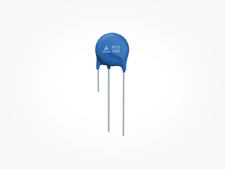
TDK Corporation (TSE:6762) has extended its EPCOS ThermoFuse™ family of fuse protected varistors with the new compact NT14 and NT20 series. The new ThermoFuse components feature a footprint that fits into existing circuit board layouts. The NT14 series (disk diameter 14 mm) is designed to absorb maximum surge currents with an 8/20-μs pulse of 6 kA at rated voltages of between … [Read more...]
UNECE Regulation 10: Electrical/Electronic Sub-Assembly Radiated Emissions Testing (Annexes 7 and 8) and Radiated Immunity Testing (Annex 9)

In this installment in the series of blogs on UNECE Regulation 10, Revision 5, Amendment 1 (8 October 2016), hereafter referenced as R10.05, we will look at radiated emissions and immunity testing of Electrical/Electronic Sub-Assemblies (ESAs). ESA RADIATED EMISSIONS (Annexes 7 and 8) Like the vehicle radiated emissions testing annexes, R10.05 has separate … [Read more...]
UNECE Regulation 10: Vehicle Radiated Emissions & Immunity Testing (Annexes 4, 5 and 6)
Having dealt with the administrative side of Type Approval to UNECE Regulation 10, Revision 5, Amendment 1 (8 October 2016), hereafter referenced as R10.05, in the first three blogs in this series, this installment begins looking at the tests themselves commencing with the radiated emissions requirements of Annexes 4 and 5 and radiated immunity requirements of Annex … [Read more...]
UNECE Regulation 10: Worst-Casing
Before applying for a new Type Approval, or extension of an existing certificate, the applicable tests must be agreed with the Technical Service. A later blog in this series will cover the subject of approval extensions, so for this post we will consider new approvals. Where a manufacturer has multiple variants and/or configurations, worst-casing can significantly reduce … [Read more...]
UNECE Regulation 10: Conformity of Production
In this second blog in the series on Type Approval to UNECE Regulation 10, Revision 5 we will cover the subject of Conformity of Production (CoP) and explain why it is a critical part of the Type Approval process. The requirement for CoP is a fundamental element of the 1958 Agreement and the procedure is set out in Schedule 1 therein. Approval Authorities are required to … [Read more...]
- « Previous Page
- 1
- …
- 3
- 4
- 5
- 6
- 7
- …
- 57
- Next Page »